• Images
  • Writing
  • Motion
  • About
Menu

Leyland Cecco

  • Images
  • Writing
  • Motion
  • About
×

The Face of Climate Change: How Inuit Youth Lead The Fight To Save The Arctic

Leyland Cecco December 17, 2015

As published by The Guardian

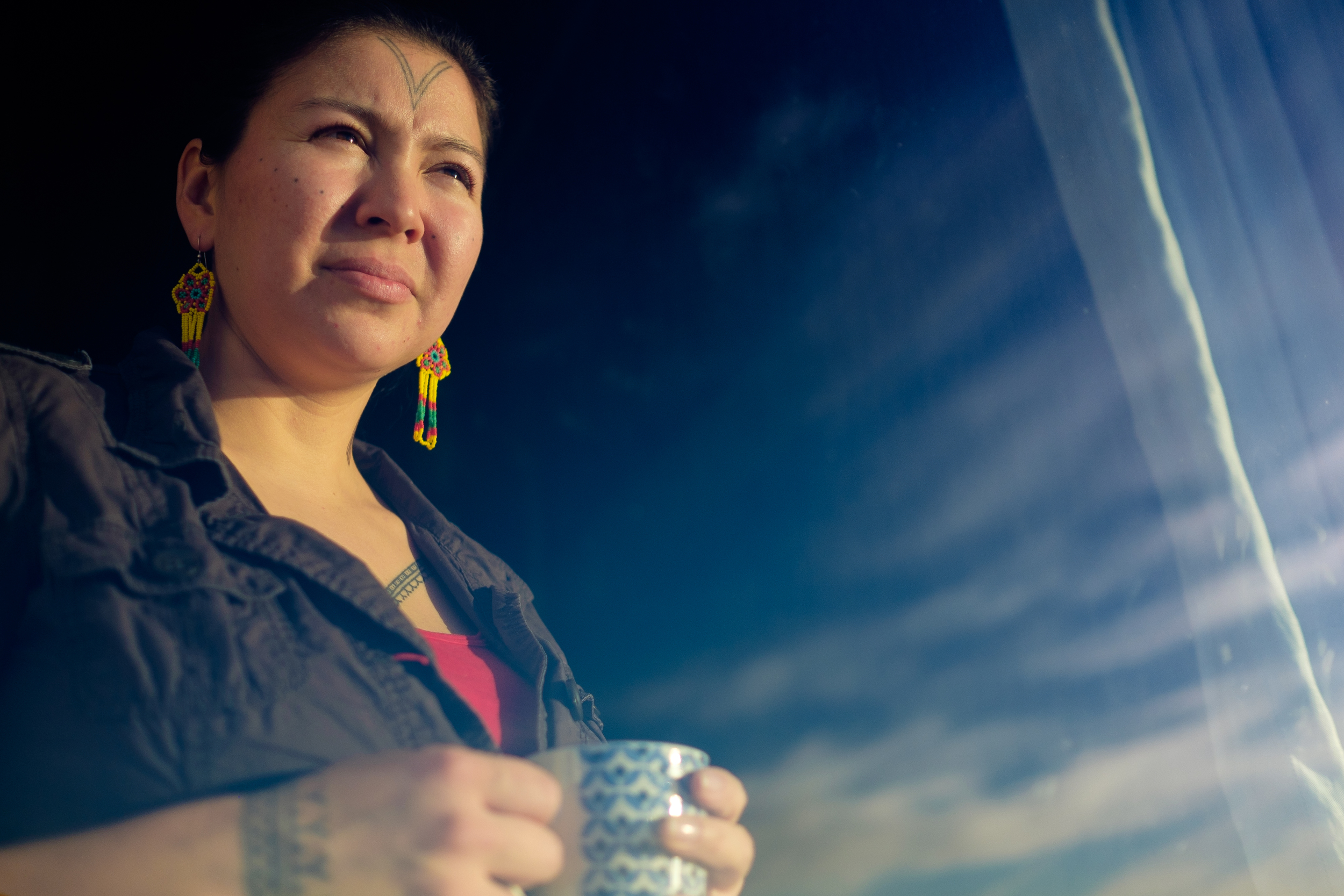
Maatalii Okalik is tired of seeing polar bears as the face of climate change. “Make it an Inuit face. We’re the ones that are really affected by it,” she told the Guardian in a phone interview from Paris.

At the Paris climate conference, the bear is a trope on banners and posters. Politicians and activists are taking note of the Arctic’s plight, invoking sprawling vistas and vulnerable wildlife as a cautionary tale. “This summer, I saw the effects of climate change first-hand in our northernmost state, Alaska,” Barack Obama said in his opening remarks at the conference. “Where the sea is already swallowing villages and eroding shorelines; where permafrost thaws and the tundra burns; where glaciers are melting at a pace unprecedented in modern times.”

But Okalik, President of Canada’s National Inuit Youth Council, says the soaring rhetoric of saving the Arctic is not enough. “Inuit continue to be the human barometer of climate change,” she said. “They have been saying to the international community for years that climate change is happening at a rapid pace.” If action if going to be taken on preserving life in the Arctic, she argued, traditional Inuit knowledge and experience needs to be included.

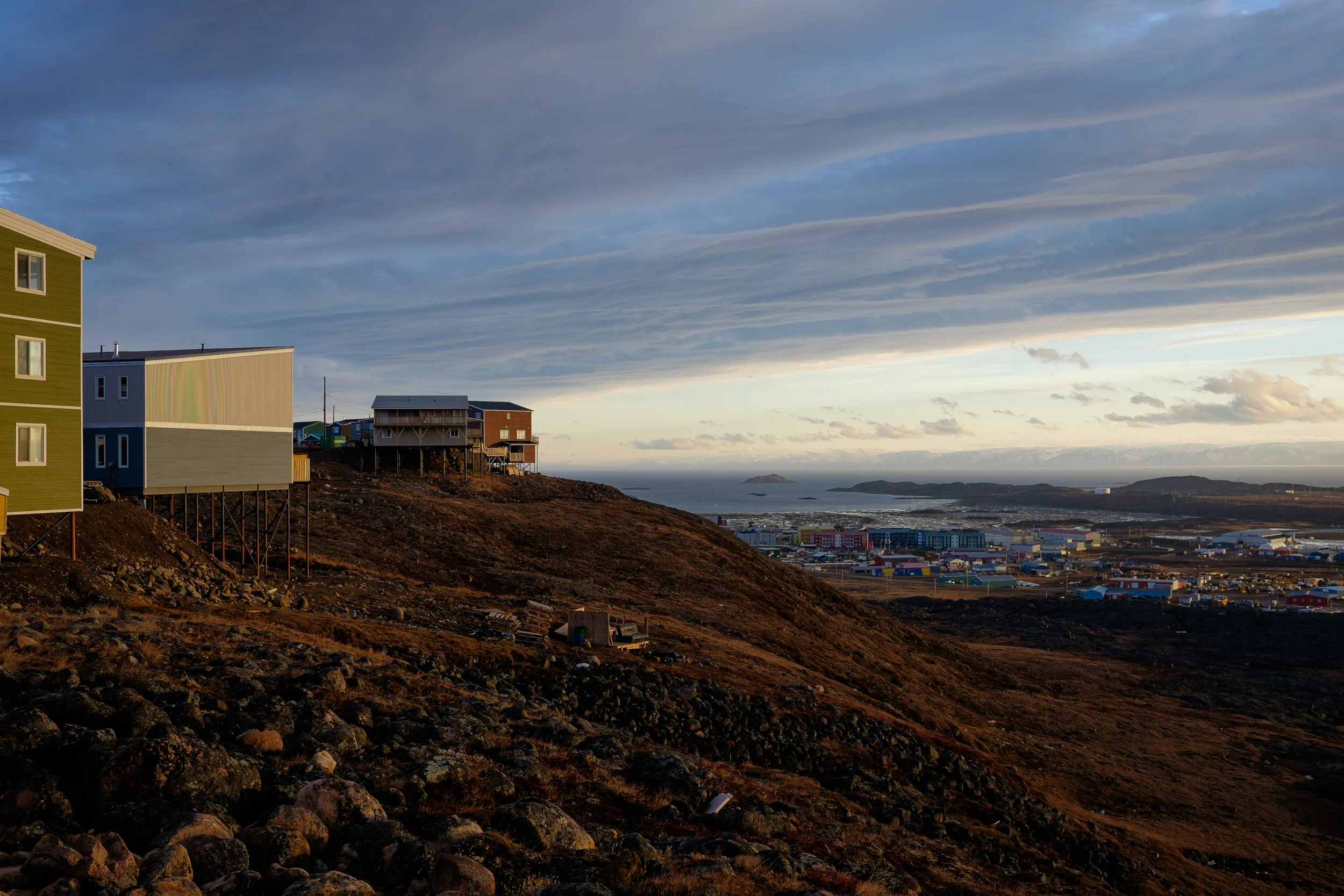
Bound by tundra, rock and frigid waters, Iqaluit is more than 2,700 miles from Paris.

Far removed from the world’s climate deliberations, it’s the centre of a quickly changing landscape. It’s also the Canadian Arctic’s capital and the consummate frontier city, with a rapidly growing population. The median age of the territory is below 25, and one-third of the residents are under the age of 15. The Arctic is young.

For the Arctic’s new generation, the last decade has been one of hollow promises in the face of ongoing crises. The territory is powered on costly diesel fuel, it lacks sufficient housing, and the cost of living is too high for many Inuit residents. Annual pilgrimages of political leaders to the north have been, for the most part, political theatre, accompanied by photo ops and platitudes to the residents asking for more money to alleviate the glut of problems in the region.

One youth leader has grown increasingly frustrated with inaction on both environmental and social issues affecting youth. Two months ago, Okalik used her role as head of the National Inuit Youth Council to question federal candidates before the Canadian election. “If elected and as our voice in Ottawa, do you commit to implementing the 94 calls to action put forth by the Truth and Reconciliation Commission, and what specific measures will you take?” she asked to heavy applause from the crowd. As the moderator pointed out, she was one of the few young people in the crowd.
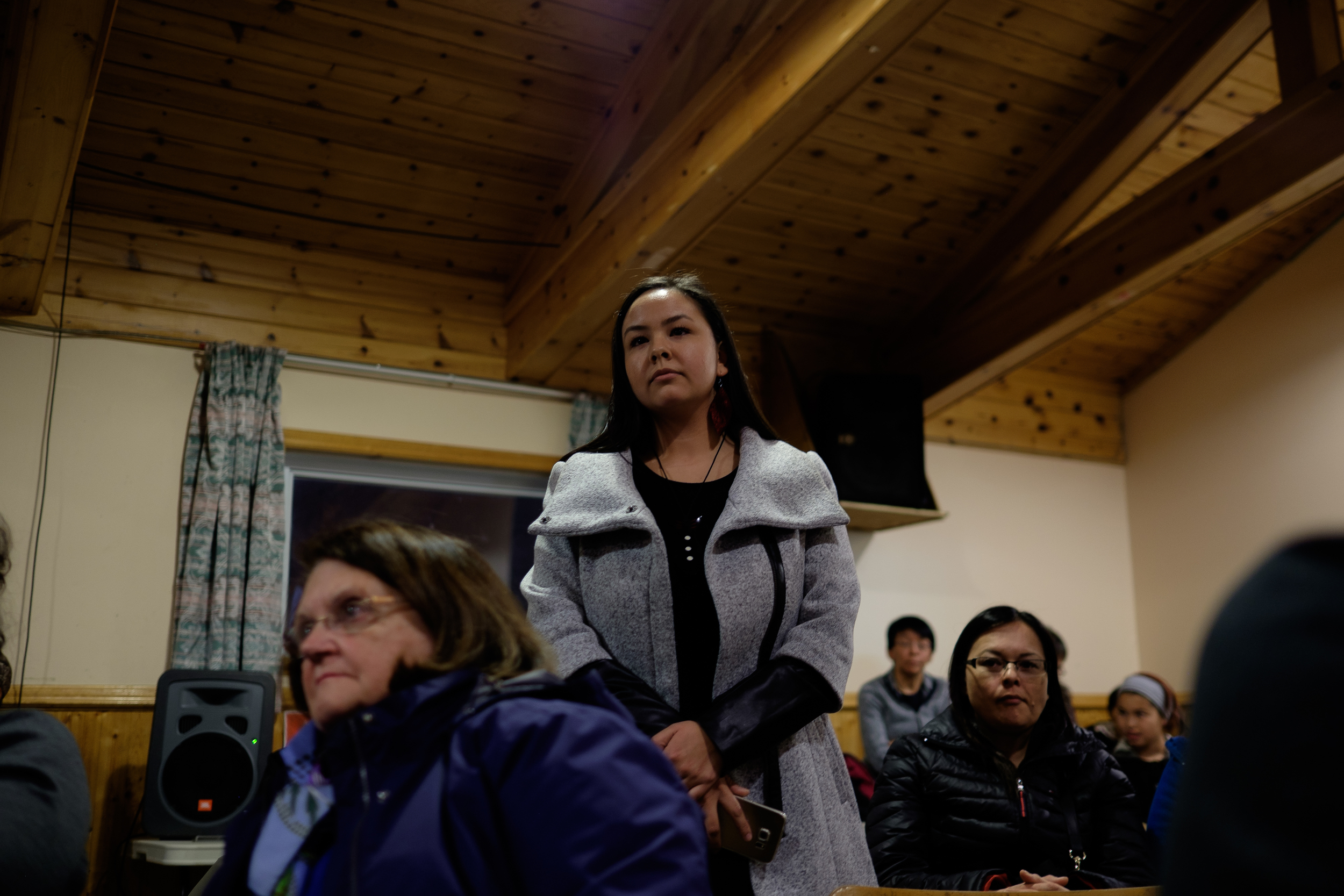
Maatalii Okalik

Maatalii Okalik

Two months later, she travelled to Paris for the COP21 conference as an Arctic delegate, representing the Nunavut territory to monitor the talks and to lobby for the inclusion of indigenous voices in the agreement. With many elders lacking the tools to engage the international community, Okalik sees a clear role in discussions for her generation.

“Inuit traditional knowledge has identified the impacts of climate change,” she told the Guardian. “Hunters know animal migration routes and how they’ve changed. We want traditional knowledge to be included as a valid form of evidence.”

Elders have told her the environment has changed dramatically over the years. While sea ice is the most common indicator of climate change, hunters have noticed more subtle changes. Seventy years ago, she is told, hunters could eat polar bear meat raw, with no consequence. Now, it must be boiled for more than six hours to prevent the harmful effects of trichinella. Ring seals, an Inuit favourite, are being pushed out of traditional hunting grounds by larger harp seals. The hunts now yield less, and the sea ice has grown increasingly unpredictable for experienced hunters. Last year, a veteran hunter disappeared just outside of Iqaluit during the spring festival. The constellation of impacts from climate change further exacerbates problems in a region suffering from chronic food insecurity.

“Elders who hold knowledge – they don’t have the social media skills, electronic skills or even English skills to speak up,” said Alethea Arnaquq-Baril, an Inuit filmmaker, of the capabilities needed to effect change and advocate for Inuit issues.

This hamstringing of an older generation, many of whom grew up in forced resettlement outpost camps and speak Inuktitut as their mother tongue, means that important voices in the community often go unheard. But for Arnaquq-Baril, it’s the younger generation who are emerging with the strongest voice. “In many cases, it’s the youth fighting to preserve culture and the elders saying, ‘No, let this go.’”

There was a time Inuit were discouraged from taking pride in their heritage, Okalik says. But the shame imbued within the community is fading quickly. Her generation is eager to absorb traditions and skills suited to thriving in a hard environment.

She studied political science and human rights at university, “but I put my experience hunting and cleaning skins and sewing kammiqs [boots] as my formal education”, she said.
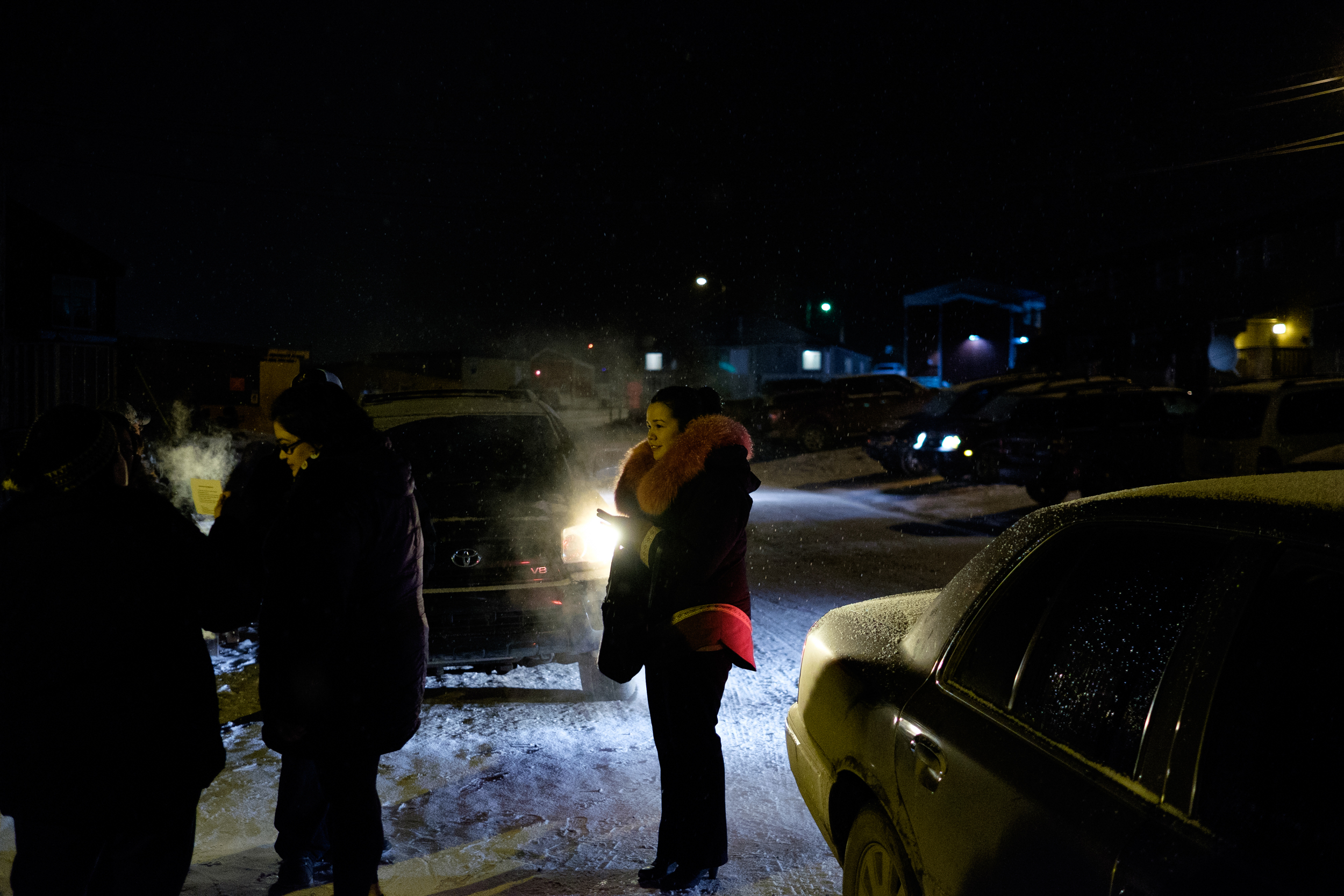
This push for renewed pride and identity among Inuit youth emerges from a generation bookended by crisis. In October, red dresses dotted the capital. Hung on doors by friends and families, the garments were meant to commemorate young Inuit women lost to domestic violence. Suicide rates among Inuit youth are some of the highest in the world. “There isn’t one Inuk who hasn’t had someone close to them affected by suicide. It is so rampant and devastating and happens at such a high rate that it’s almost normal now,” says Okalik.

A dress hangs outside a house to commemorate the high number of indigenous women who are victims of violence. Photograph: Leyland Cecco for the Guardian

Much of this stems from a not so distant history, when Inuit were sent to government-run residential schools, though some living in the western Arctic were sent as early as the 1860s. The aim of the schools was to assimilate them into the Christian students, mirroring a southern lifestyle. For many, both their identity and body were beaten. “My mother’s generation was constantly told being Inuk is not good enough,” says Franco Buschemi, an emerging stand-up comic. To make sense of tragedy and pain, he takes an unconventional approach: he tells jokes.

Buschemi recalls reactions to poking fun at a rash of suicides in Canada’s northern territory that have led it to issue a state of emergency. “It’s pretty dark,” he admits. “But Inuit love to tell jokes.” His material is infused with enough social commentary to disarm his audience, but also to get them thinking. “The comedy I’m doing is northern art. There are jokes that you have to understand the culture of living in the north,” he says. With plans to cajole a friend “who does a great Inuktitut Donald Duck” into a comedy troupe, Buschemi hopes to wed northern humour with southern form.

As the world awaits a decision from Paris, Inuit youth draw optimism from the success of their ancestors adapting to thrive in the Arctic. “So much has happened in the last 70 years alone when it comes to Inuit having to quickly react and respond to change,” says Okalik. Using traditional knowledge, she feels the global south could do the same.
Comment
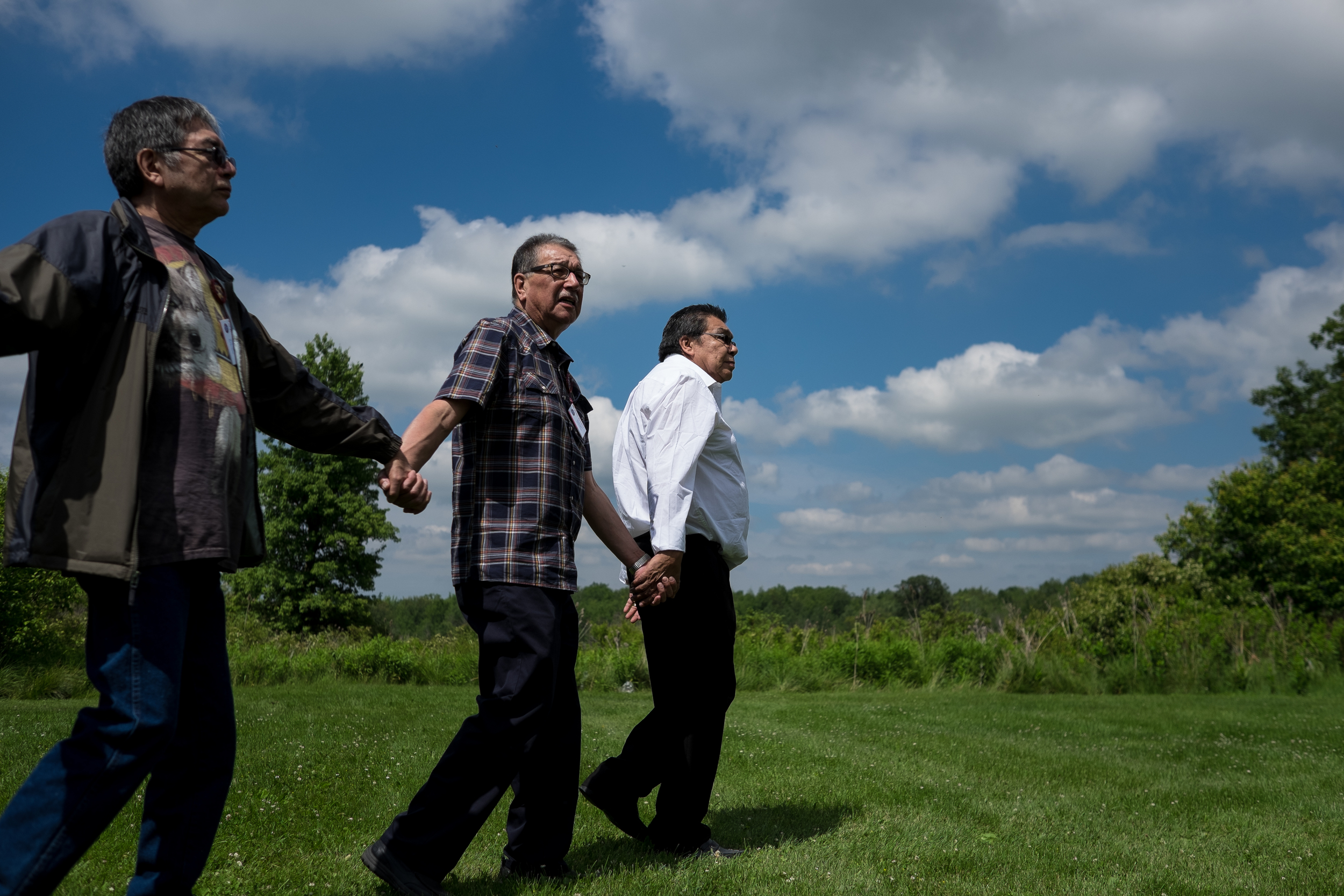
Bill Merasty (Left), Bill Chippeway and Charlie Bittern participate in a friendship dance on the lands of the New Credit.

Bill Merasty (Left), Bill Chippeway and Charlie Bittern participate in a friendship dance on the lands of the New Credit.

A History of Denial

Leyland Cecco July 10, 2015

New Credit First Nation, Canada Shouts of excitement accompanied 13-year-old Ryann LaForme on a Friday afternoon in June as she slowly proceeded with the 2015 Pan American Games torch, entering the grounds of the Mississaugas of New Credit for the first time. Flanked by a detail of police officers, the Ojibwe teen made her way through the crowd, pausing every few steps for photos.

The upcoming Pan American Games, which will be co-hosted by Toronto and the Mississaugas of New Credit, a First Nations community more than an hour southwest of Toronto, are the largest multi-sport event ever to take place in Canada. 6,100 athletes from 41 countries throughout the Americas will compete in 36 different sports over the course of two weeks. With the games kicking off on July 10th, there is one important aspect missing: Aboriginal athletes. Despite a heavy push by organizers to highlight indigenous involvement, culture and history in the games, organizers know of only two Canadian Aboriginal athletes participating, Jamie Thiebault, a Métis volleyball player from Alberta, and Carlie Leigh Thomas, a Six Nations softball player. The fastest growing demographic in the country are First Nations youth, but their presence in high level sports competitions remains chronically low.

Aboriginal athletic involvement continues to be a reflection of an ongoing struggle within communities across the country. The torch relay and spotlight on Aboriginal inclusion comes just a few weeks after the release of a scathing report by Canada’s Truth and Reconciliation Commission on the history of mistreatment suffered by First Nations students who went through the country’s infamous residential schools. More than 3,000 witnesses testified over a span of seven years on the constellation of abuses experienced at the schools from whippings to sexual misconduct and cultural destruction.

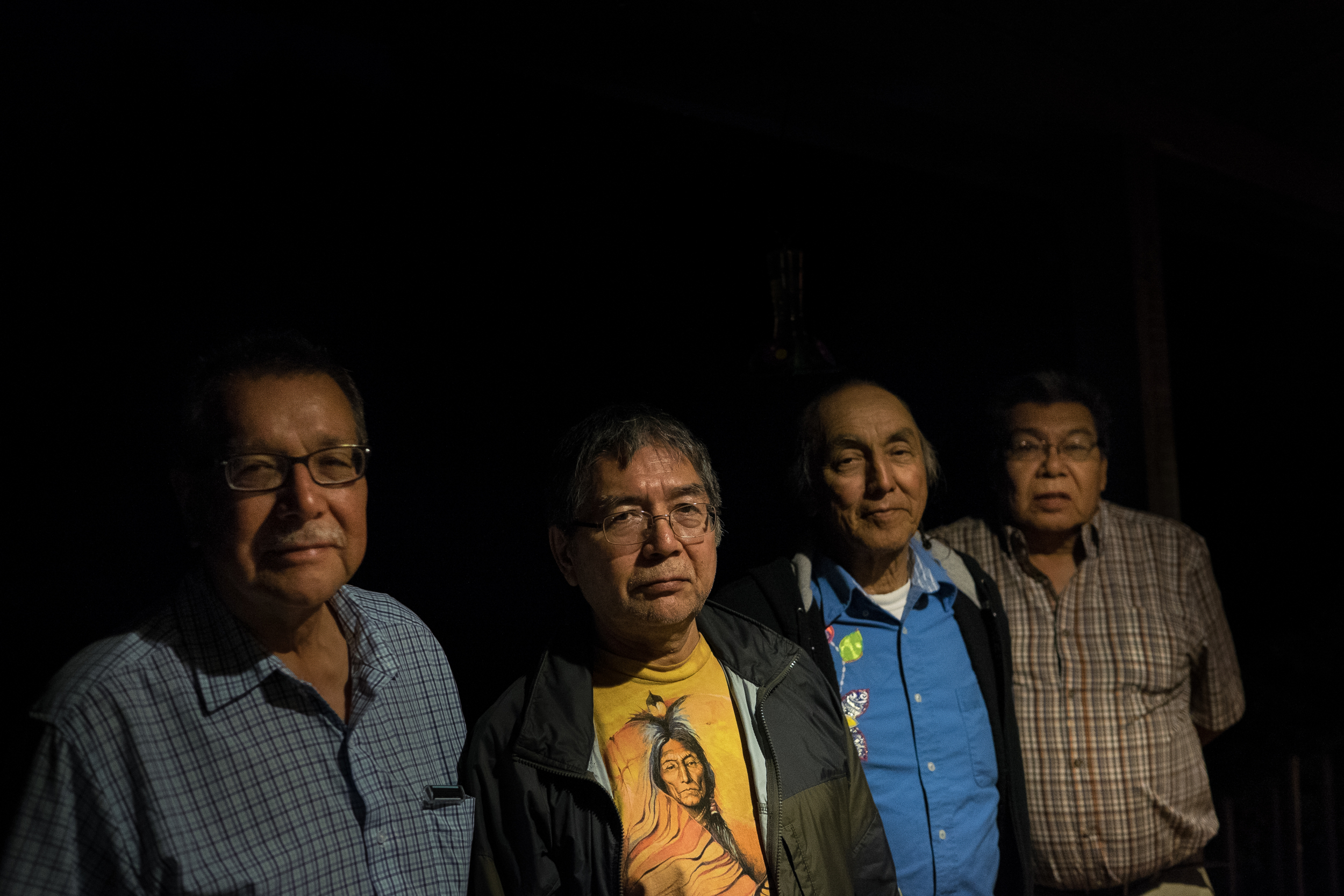
Standing along the New Credit torch run with grins on their faces, Charlie Nelson, Bill Chippeway, Charlie Bittern and Bill Merasty watched LaForme carry the flame. The Ojibwe men, in their 60s and 70, trace their involvement in the Pan Am Games back to 1967 when Canada first hosted the international event. The four men’s torch relay almost 50 years ago has become a source of inspiration for First Nations communities across the country and an exemplar of how the legacy of residential schools continues to malignantly leach into today’s youth.  

_______

In the summer of 1967, Winnipeg, Manitoba was host to the Pan American Games, a competition held every four years and the largest event to ever take place inside the quickly growing city.

As the torch made its way from previous host city São Paulo up to Canada, the organizers selected ten Aboriginal runners to carry the flame in its final leg from St. Paul, Minnesota to Winnipeg. All but one, David Courchene, were drawn from residential schools in Manitoba. The flame arrived in Minneapolis, site of the US Pan Am trials, and the formal start to the journey began July 17th as the torch was lit on the steps of the Minnesota capitol.

Over five days, the youth traced an old route used by Aboriginal runners to carry mail from the United States to Canada, covering 500 miles. Chaperoned by a Minnesota State Trooper, the lanky teenagers split their running into shifts of a mile each, treading along the highway towards Canada. “We ate like kings and slept in mansions,” recalls Bill Merasty in stark comparison to life in residential schools.

The boys were all selected for their running prowess, a skill they credit as being part of their heritage, but also bodies conditioned by a life eked out on the land. “As runners, we were able to capture the rhythm of the land. We were able to feel the heartbeat of the earth. It was what gave us the strength and endurance,” says David Courchene Jr. “The land is lifting you. And as we're running, it's through our hearts, we were able to hear the voice of our ancestors encouraging us.”

The runners, in 1967.

The runners, in 1967.

The runners, in 1967.

The runners, in 1967.

Bill Chippeway, Bill Merasty, Charlie Nelson and Charlie Bittern, 48 years after the run. 

Bill Chippeway, Bill Merasty, Charlie Nelson and Charlie Bittern, 48 years after the run. 


Their lineage produced heroes like Tom Longboat, an Onondaga from the Six Nations Reserve fittingly near New Credit. Nicknamed ‘Wildfire,’ he was an indomitable distance runner, winning the Boston Marathon in 1907 and earning himself the title ‘Professional Champion of the World’ the following year. But, throughout Canada’s sporting history, only one First Nations athlete has ever won an Olympic gold medal. In the 1984 Los Angeles Olympics, Alwyn Morris proudly held up an eagle feather after his victory in the sprint kayaking event. Subsequent Canadian Olympic teams, winter or summer, rarely have more than two or three First Nations athletes. Pan Am teams haven’t fared much better, with Waneek Horn-Miller, a Mohawk water polo player who won gold for Canada at the 1999 Pan Am Games and competed in the 2000 Sydney Olympics the most notable example.  

Charlie Bittern, a polio survivor, originally qualified for the Pan Am Games in the two-mile track race. Despite his win over university-aged athletes, he was told that instead of competing in the games, he would carry the torch as part of a relay team. Yet, the journey was also an escape from the harsh life of residential schools. “If you were doing something wrong, you were whipped. You weren't strapped- you were whipped. There's a difference,” says Bittern.

The robust sports programs available to the student lessened the daily cruelties. Used to a life outdoors, both Bill Chippeway and Charlie Bittern have fond memories of sports year round, including basketball, hockey and track. But because of Bittern’s speed and endurance, he was used by the principal to chase down runaway students.

“Here I was, given a talent, and to me I abused it. It affected me for awhile, until this one friend said, ‘I forgive you, for what you did. If you had your way, you would have never done it.’”

The plan for their torch run, as the boys understood it, would have them carry the flame into the stadium, to be handed off to another runner. As they approached, the sky quickly darkened and a downpour of rain blanketed the city. Before they could enter the grounds to finish their run, officials stopped them and had Courchene hand over the torch to a non-Aboriginal athlete, who completed the final leg of the run, ascending the steps towards the cauldron.

At the time, none of the runners realized the snub at the end of their run was because they were Aboriginal. Instead, it seemed like a mistake borne of the frantic organization surrounding the event. “You know, when you're young, there's a lot of things you don't realize,” says Courchene.

The boys, with the exception of Bittern, took in the opening ceremonies from the seats of a nearby pancake house, eyes on a television. Bittern was put back on a bus to his residential school shortly after the run was finished, and remembers seeing fireworks bursting overhead as he watched the city slowly fade away.

After years of reflection, Courchene believes the men have come to represent a denial that continues to permeate the experiences of many Aboriginal athletes. “The denial of going into the stadium was really a metaphor for the way that we found ourselves as the original people being marginalized and never really being fully accepted within our homeland.” Denial today exists in a different form. The complex problem of exclusion in sport is underpinned by a deficit of opportunity. Because reserves are often in remote locations, access to sports facilities and coaches requires long distance travel and owning a vehicle. ”A lot of First Nations live in poverty. We're not rich people,” says Bittern. “But if a child has the capability to compete internationally, by all means, give him that chance.”

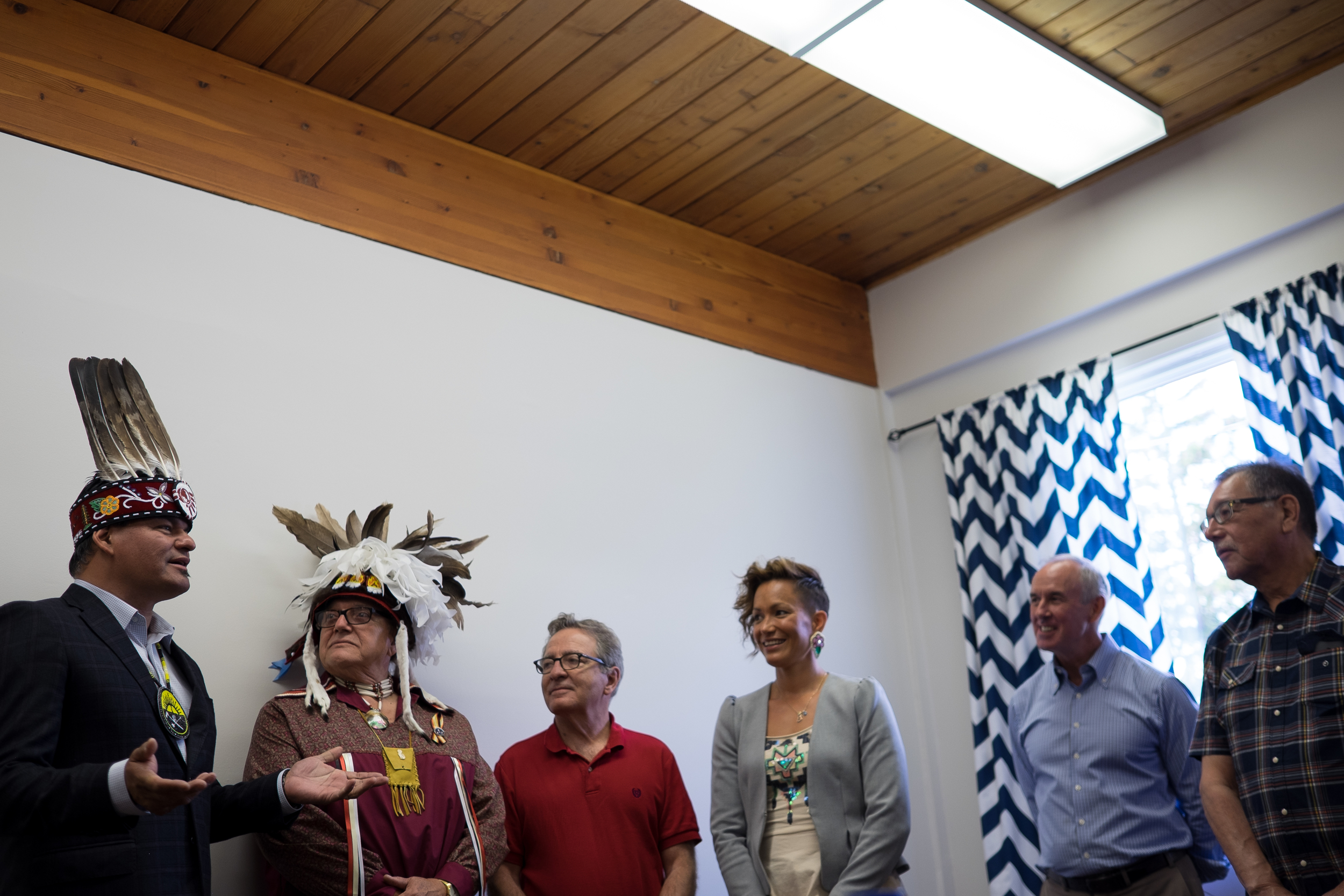
Ontario Regional Chief Isidore Day (left) speaks with New Credit Chief Brian LaForme, Minister George Zimmer, Waneek Horn-Miller, Ron McLean and Bill Chippeway about the journey of the runners in 1967. 

Ontario Regional Chief Isidore Day (left) speaks with New Credit Chief Brian LaForme, Minister George Zimmer, Waneek Horn-Miller, Ron McLean and Bill Chippeway about the journey of the runners in 1967. 

_________

ln 1999, three years after the last residential had closed, Pan Am organizers reached out to the runners, then in their 50s. Winnipeg was hosting the games once more. They were asked to lead the torch into the stadium- an attempt by the province and organizers to let the men finish their run and right a historical wrong.

Courchene proudly carried the torch once more, as he had back in 1967. One condition the men had requested was that the torch then be handed to a young First Nations girl, transferring the flame to the next generation.

“It felt within our own heart that the spirit of our ancestors celebrated that we had completed a significant part of the journey. But the story was not over,” says Courchene. With youth continuing to be a quickly growing demographic, the men set their sights on serving as role models, unwilling to fade back into anonymity.

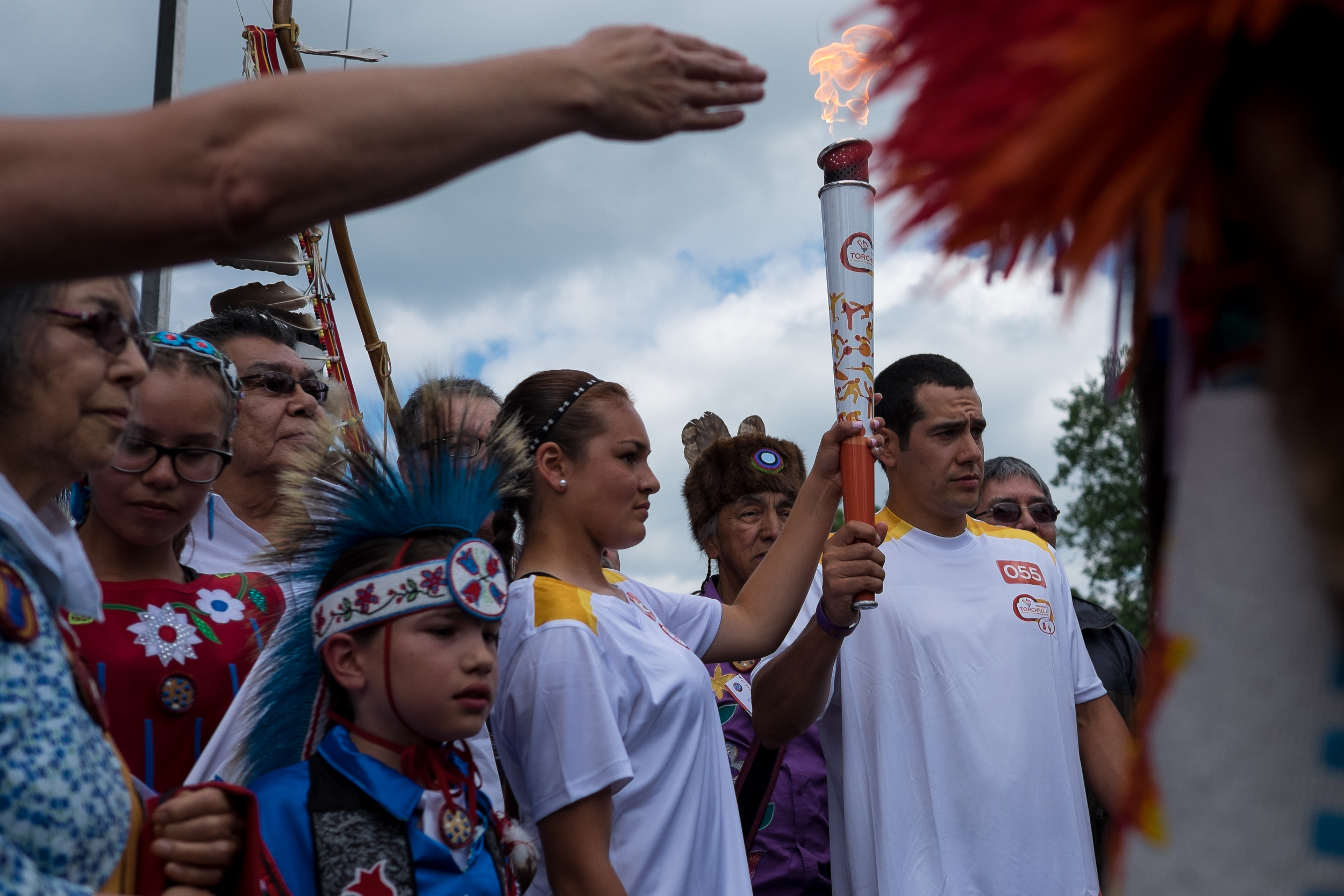
Ryann Laforme (centre) holds the Pan Am torch as during a celebration in New Credit. Charlie Bittern, Bill Chippeway, Charlie Nelson and Bill Merasty stand behind her. 

Ryann Laforme (centre) holds the Pan Am torch as during a celebration in New Credit. Charlie Bittern, Bill Chippeway, Charlie Nelson and Bill Merasty stand behind her. 

Journalist Laura Robinson wrote a short play based on runners’ experiences, and called the men the ‘FrontRunners’. Used to describe the young First Nations boys in northern Canada who would run ahead of the sled dogs to cut a track while trapping fur, it was a job for only the fastest. She also used it to refer to the leadership roles the men have taken in their respective communities, promoting culture and youth outreach. The name stuck. “I remember my mom telling me about a group of First Nations runners,” Waneek Horn-Miller told the FrontRunners prior to the New Credit torch ceremony. Current Assistant Chef de Mission of the 2015 Pan Games, the Mohawk athlete also competed in previous Pan Am and Olympic Games. “When I was competing, I thought of your run, and your struggle. It gave me inspiration.”

A settlement between the Canadian government and First Nations communities over residential schools led to the formation of the Truth and Reconciliation Commission (TRC). A restorative justice body, it was tasked with the collection of testimony from both victims and perpetrators. The structure and scope were similar to the system used in South Africa after apartheid, but the Canadian iteration of the TRC lacked the ability to subpoena and offer amnesty from prosecution, hamstringing its ability to compel testimony from perpetrators. The TRC began its mandate June 2, 2008, and finished June of 2015. It was through these hearings that Bittern came to realize the extent to which his heritage had denied him to compete. “I had records, but I was never recognized.”

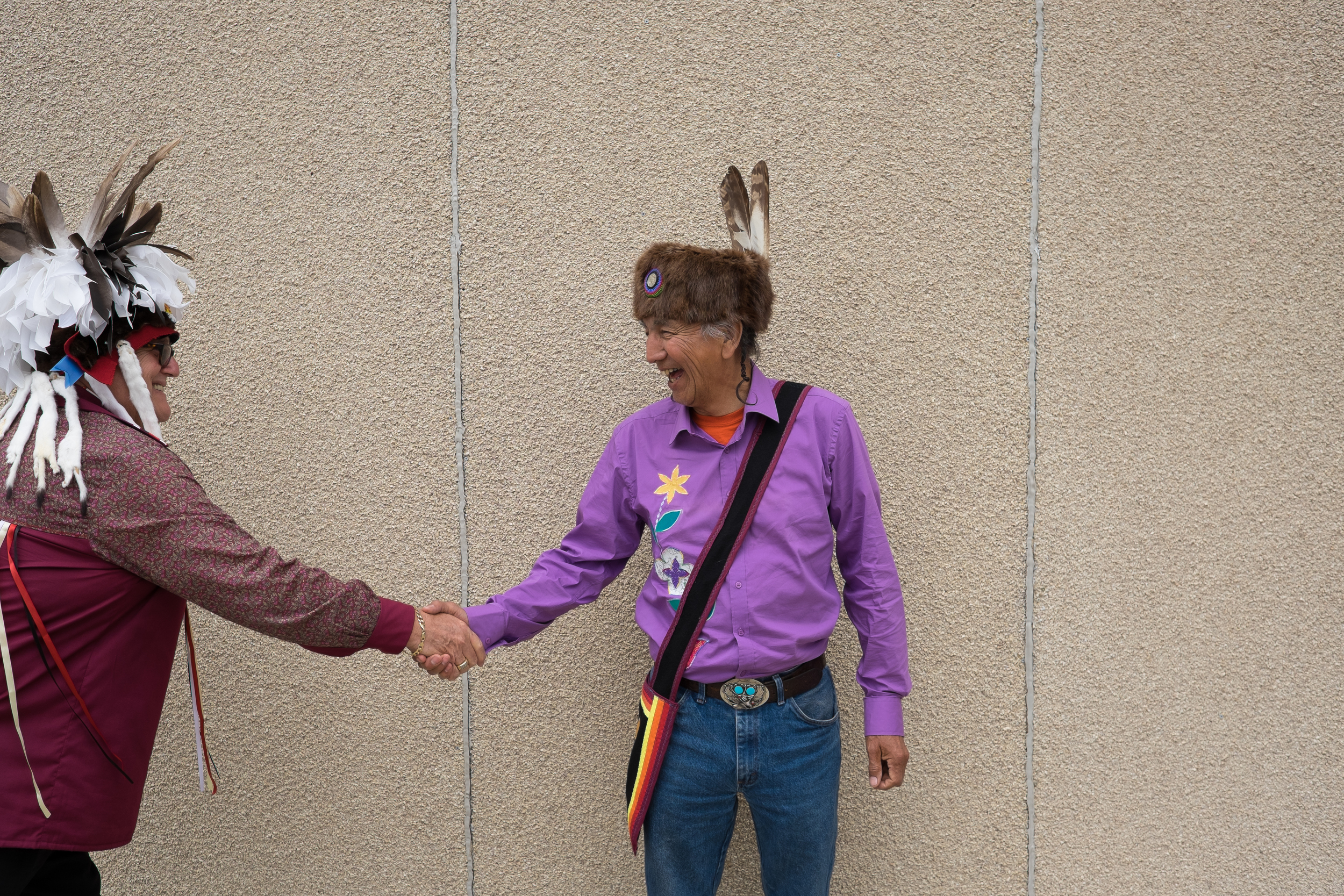
Runner Charlie Nelson (right) is greeted by New Credit Chief Brian LaForm during a celebratory event hosted by the community to welcome the torch. 

Runner Charlie Nelson (right) is greeted by New Credit Chief Brian LaForm during a celebratory event hosted by the community to welcome the torch. 

For Bill Chippeway, testifying to the Commission dredged up dark memories from his youth. The abuse he experienced in the following years at Sandy Bay Residential School slowly broke him. “I couldn't do nothing. I couldn't tell anybody, didn't want to tell anybody. I was ashamed of what happened to me. I was hurt.”

“I dropped out of school, I became a drunk,” says Chippeway, voice tight, sentences short. “Started boozing, started abusing drugs. I was a drug addict, an alcoholic. And I didn't know why this was happening to me, why I enjoyed booze so much. And when I used to be drunk, I used to cry. Because I used to think about what happened to me at Sandy Bay.” Running was an escape. “In the schools, we were like hostages.” He later embraced Cree culture in Alberta, a departure from his Ojibwe roots. He sought the help of elders to heal. He credits his years of sobriety and recovery tradition and community, along with the support of his wife.

For the runners, experiences in residential schools are inextricably tied to the dire situation Aboriginal youth face. His experiences run parallel to many survivors of the school, including the permeating stress and shame that followed him for years after leaving the school.

“Significant disparities exist between the social, economic and cultural opportunities available to Aboriginal peoples and to Canadians on the whole. This is reflected in higher rates of illness, premature mortality, school leaving, unemployment, poverty, and incarceration among Canada’s Aboriginal population,” says a report by the Canadian Center for Ethics in Sport. 

Organizers of the 2015 games are acutely aware of the failings to recruit and train a large number of Aboriginal athletes. “The government of Ontario has just announced that it’s invested 3 million dollars in an First Nations sports and wellness program that will in part address these gaps at the grassroots level,” says Kenn Ross, head of Aboriginal Relations for the 2015 Pan Am Games.

The preliminary TRC report was released in June, 2015. Couched in a long list of recommendations, Chairman Murray Sinclair, an Ojibwe-Canadian judge, concluded that the actions of the state, in concert with religious institutions, amounted to cultural genocide. Stained by elevated suicide rates, addiction and mental health issues, and a vulnerable youth population, First Nations communities across the country continue to feel the effects of the schools. The release of the report only pushes the men harder to inspire and guide youth. It was sport that helped them during the schools, and they see it as one of the solutions for communities in crisis.

The FrontRunners have been asked to return as guests of honour for the Opening Ceremonies in Toronto on July 10th. Despite depressing statistics surrounding First Nations inclusion in sport, they remain optimists. Bittern has an old tape from the infamous 1967 run that he shows to students when he gives talks. “Their mouths are wide open, and their reaction is, 'I want to be that',” says Bittern. “I tell them, nothing's stopping you.”


1 Comment
← NewerOlder →